Moksliniai straipsniai, atspausdinti 2001m.

Print
Teksto dydis: +1, +2, normalus

V.Straižys, K.Černis, S.Bartašiūtė. Interstellar extinction in the California Nebula region. - Astron. Astrophys., 2001, V. 374, 288-293.

G.Tautvaišienė, B.Edvardsson, I.Tuominen and I.Ilyin. Chemical composition of red horizontal branch stars in the thick disk of the Galaxy. - Astron. Astrophys., 2001, V. 380, 579-589.

V.Malyuto, R.Lazauskaite, T.Shvelidze. Simulated quantitative stellar classification at different spectral resolutions. - New Astron., 2001, V. 6, 381-392.

M.R.Nasser, J.-E.Solheim, D.A.Semionoff. NLTE accretion disc models for the AM Canum Venaticorum systems. - Astron. Astrophys., 2001, V. 373, 222-235. (neteiktas MSD 2001*)

P.Bogdanovich, R.Karpuškienė, I.Martinson. Teoreticheskiy raschet veroyatnostey perekhodov i vremen zhizny urovney 4d95p-konfiguracii Cd III. - Opt. Spektrosk., 2001, T. 90, No. 1, 8-11.

Moksliniai straipsniai, atspausdinti 2000 m.

Print
Teksto dydis: +1, +2, normalus

V.Gineitytė. Generalization of the Dewar formula for total energies of molecules. - Int. J. Quantum Chem., 2000, V. 77, 534-543.
V.Gineitytė. The rebonding effect in hydrocarbons as a quantum-chemical analogue of the classical concept of conjugation. - J. Mol. Str. (Theochem), 2000, No. 497, 83-90.
G.Juzeliūnas and D.L.Andrews. Quantum Electrodynamics of Resonance Energy Transfer. - In: Advances in Chemical Physics, ed. I.Prigogine and S.A.Rice (Wiley, New York, 2000), 357-410.
G.Juzeliūnas and J.Knoester. Pump-probe spectra of molecular assemblies of arbitrary structure and dimension. - Journal of Chemical Physics, 2000, V. 112, No. 5, 2325-.
A.Kučinskas, V.Vansevičius, M.Sauvage and T.Tanabe. New infrared object in the field of the SMC cluster NGC 330. - Astron. Astrophys., 2000, V. 353, L21-L24.

Venera

Venera
Teksto dydis: +1, +2, normalus

Aušrinė, Vakarinė, Saulės sistemos planeta, antra pagal nuotolį nuo Saulės. Artimiausia Žemei vidinė planeta. Trečias pagal spindesį (po Saulės ir Mėnulio) dangaus objektas; didžiausias spindesys yra -4.1 ryškio, didžiausias kampinis skersmuo 20". Aplink Saulę skrieja beveik apskrita orbita 35 km/s vid. greičiu. Apie ašį sukasi labai lėtai ir priešinga kryptimi, negu kitos planetos. Nutolsta nuo Saulės dangaus skliaute ne didesniu kaip 48 kampu, dėl to matoma tik kurį laiką prieš Saulei patekant (Aušrinė) arba Saulei nusileidus (Vakarinė). Venera turi labai tankią ir stipriai Saulės šviesą atspindinčią atmosferą, kuri susideda iš anglies dioksido (~96%), azoto (~3.5%), sieros dioksido (0.015%), argono (0.015%), helio (0.01%), kitų dujų. Veneros paviršiaus nesimato, nes jos atmosferoje 50-70 km aukštyje yra trys debesų sluoksniai. Debesis sudaro 2-3 µm dydžio sieros rūgšties lašeliai ir 5-8 µm dydžio geležies chlorido kristalai.

Christopher Columbus

Print
Teksto dydis: +1, +2, normalus

Christopher Columbus was an Italian, the son of a poor weaver. He was born in 1451 in Genoa, an Italian seaport. At that time Genoa was one of the richest cities in the world. Genoese merchants travelled all over Europe to sell silks, coral, fruit and other things and Genoese seamen sailed the merhant ships not only in the Mediterranean but on other seas too. In the middle of the 15th century much of the world was still unexplored, and most European countries were eager to find and lay claim to new territory and thus become rich. Consequently there was much fighting on the seas. The Mediterranean galleyswere constantly passing in and out of the port of Genoa to load or unload cargoes. Their hardly crews had often been engaged in dangerous adventures and their fine and graceful ships were in a battered condition, and the seamen had plenty of exciting stories to tell little Christopher Columbus.

Merkurijus

Merkurijus
Teksto dydis: +1, +2, normalus

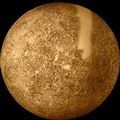
Merkurijų galima pamatyti plika akimi, bet jį stebėti sunkiau negu kitas keturias planetas, žinomas nuo senų senovės. Merkurijus skrieja arčiausiai Saulės; vidutinis nuotolis nuo Saulės – 58mln. km, aplink ją apskrieja per 88 paras. Didžiu ir mase Merkurijus panašesnis į Mėnulį nei į Žemę. Jo skersmuo – 4878km. Pabėgimo greitis – tik 4,3km/s. Merkurijaus paviršius nelygus, nusėtas daugybės kraterių. Dėl mažos masės ir Saulės spindulių kaitinamojo poveikio, Merkurijaus atmosfera labai reta (susideda iš helio, vandenilio, deguonies, neono ir argono), todėl jam būdingi nepaprastai dideli tempertūros svyravimai, siekiantys iki 600 laipsnių C. Prieš milijardus metų jame buvo stiprus vulkanizmas.

Class life

Print
Teksto dydis: +1, +2, normalus

Autumn for students is necessarily related with school. To some this relation reminds of time spent the best possible way but to some it is the most horrible thing. I myself don’t long for school so much as I do for my classmates. That is easily explained: we’ve already spent nine years together (that isn’t aimed for all the students). During this big period of time we somehow sifted those whom we can trust, those who we can rely upon and those whom we should better leave alone. Now the school: for me it won’t be just a simple building that can be seen through my window. It’ll be a dungeon that must be destroyed or maybe it’ll be a second place that my soul will visit after death. I actually never could make up my mind do I love my school or do I hate it, maybe time will tell.

Žemė - magnetas

a view of the earth from space
Teksto dydis: +1, +2, normalus

Žemė turi stiprų magnetinį lauką. Dirbtinis magnetas (pavyzdžiui, pakabintas ant siūlo gulsčias įmagnetėjęs virbas) pasisuko taip, kad vienas galas rodo Žemės Šiaurės magnetinį polių, kitas - Pietų. Jei netoliese yra kitas magnetas ar didelė ritė, kuria teka elektros srovė, kabantis magnetas reaguos į kito magneto sukurtą magnetinį lauką. Žemei sukantis apie savo ašį, jos mantija su kietąja pluta, slysdamos išorinio branduolio skystuoju sluoksniu, sukasi šiek tiek greičiau negu vidinis branduolys, todėl branduolio elektronai juda mantijos ir plutos elektronų atžvilgiu. Šis elektronų judėjimas sukuria gamtinį srovės generatorių, kuris savo ruožtu kuria magnetinį lauką, panašiai kaip jį kuria indukcijos rite tekanti elektros srovė. Žemės magnetinė ašis pasvirusi į geografinę ašį apie 110 laipsnių kampu, todėl magnetiniai poliai nesutampa su geografiniais ašigaliais.Žemės magnetinės ašies posvyris nuolat kinta, bet ilgą laiką (net dešimtis tūkstančių metų) magnetiniai poliai išlieka maždaug vienoje vietoje.

Centralized world

Print
Teksto dydis: +1, +2, normalus

Now we live in the age of information. Latest technologies develop every day and even every minute. It is very important for us. Now we can find the needed person in a very short time using e-mail, mobile technologies, paging system and others. Maybe the most important of them is Internet. It started in 1960 when some governmental organizations in US wanted to connect their systems in a very reliable net, that couldn’t be affected by war. Later it developed and now we have a big computer network all over the world. And as we have so many new technologies that are used to improve communication process we are talking about such scientific term as global village. There are no not accessible places in the world. So the distances now seem not to be so big like it looked hundred years ago. Then we can talk about centralized world. We can access almost every countries data base and know everything about it. We can talk to different people in teleconferencies as if we were sitting in one room. And that makes the world small.

Žemė - O kas po pluta?

Žemė - O kas po pluta?
Teksto dydis: +1, +2, normalus

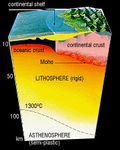
Viršutinė mantija susideda iš trijų sluoksnių: plono kieto viršutinio sluoksnio (nuo Mochorovičiaus paviršiaus iki maždaug 60-100 km gylio), klampios lyg tešla astenosferos (maždaug iki 200 km gylio) ir storo apatinio sluoksnio (tarp 20 ir 700 km). Viršutinis sluoksnis su virš jo slūgsančia Žemės pluta sudaro kietąjį Žemės apvalkalą – litosferą, kurį susideda iš keleto plokščių (megablokų). Šios plokštės horizontaliai dreifuoja astenosferos paviršiumi. Dėl labai didelio slėgio ir karščio astenosferos medžiaga beveik išsilydžiusi, taki. Viršutinę mantiją nuo apatinės skiria kita riba, kurioje medžiagos tankis toliau didėja (nuo 3,3 g/cm3 iki 4,3 g/cm3). Manoma, kad apatinė mantija susidariusi daugiausia iš peridotito; yra joje ir didesnio tankio mineralų, susidarančių dėl milžiniško slėgio, kurį sukelia aukščiau esančių uolienų masė.

Tony Blair

Tony Blair
Teksto dydis: +1, +2, normalus

Blair began his political career in 1983, when he was elected to Parliament as a member of the Labour Party. He quickly advanced to the party’s front ranks during the Conservative administration of Prime Minister Margaret Thatcher (1979-1990), when Labour was the major opposition party. He was favored by Labour leaders Neil Kinnock and John Smith; they believed his more moderate positions would appeal to British voters, who, beginning in the 1979 general elections, had started to turn away from Labour and its pro-trade union policies. From 1984 to 1987 Blair was opposition spokesman on treasury and economic affairs. He then moved to various posts in the Departments of Trade and Industry (1987), Energy (1988-1989), and Employment (1989-1992). In 1992 he was promoted again, taking charge of domestic issues in the Labour Party’s counterpart to the governing Conservatives’ cabinet.
After party leader John Smith died in May 1994, Blair was chosen to take his place. Almost immediately, Blair began working to make the party more mainstream, lessening its dependence on labor and trade unions and broadening the party’s membership. In 1995 and 1996 the “New Labour” party, as Blair called it, rapidly gained in popularity, while at the same time a long economic recession and several scandals drastically reduced support for the Conservatives.

Moksliniai straipsniai, atspausdinti 1999 m.

Print
Teksto dydis: +1, +2, normalus

G.Merkelis, I.Martinson, R.Kisielius, M.J.Vilkas. Ab initio calculation of electric quadrupole and magnetic dipole transitions in ions of the N I isoelectronic sequence. - Physica Scripta, 1999, v. 59, N 2, p. 122-132.

M.J.Vilkas, Y.Ishikawa, K.Koc. Relativistic multireference many-body perturbation theory for quasidegenerate systems: Energy levels of ions of the oxygen isoelectronic sequence. - Phys. Rev. A, 1999, V. 60, No. 4, p. 2808-2821. (MSD neteiktas)

G.Gaigalas, R.Karpuškienė, Z.Rudzikas. Optimal classification of HCI spectra. - Physica Scripta, 1999, v. T80, p. 472-473.

P.Bogdanovich, R.Karpuškienė, Z.Rudzikas. Calculation of electronic transitions in S IX.- Physica Scripta, 1999, v. T80, p. 474-475.

P.Bogdanovich. I.Martinson. Calculation of transition probabilities and lifetimes of the 4d95p levels in Ag II. - Physica Scripta, 1999, v. 60, N 3, p. 217-221.

Žemė - Žemės pluta

Žemė - Žemės pluta
Teksto dydis: +1, +2, normalus

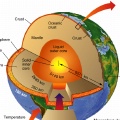
Žemės plutos ir viršutinės mantijos cheminė sudėtis nustatyta iš tiesioginių uolienų tyrimų, daromų Žemės paviršiuje arba palyginti nelabai giliai Žemės plutoje. Deja, labai nedaug težinoma, kas yra po viršutine mantija. Spėjama, kad Žemės gelmių sudėtis panašių į geležinių ir akmeninių meteoritų sudėtį. Žemę sudaro trys pagrindiniai sluoksniai – Žemės pluta, mantija ir branduolys. Žemės pluta skirstoma į kontinentinę ir okeaninę. Viršuje esanti kontinentinė pluta susideda daugiausia iš granito, joje daug silicio ir aliuminio (dėl to vadinama sialiu). Okeaninė pluta daugiausia bazaltinė, joje daug silicio ir magnio (dėl to vadinama sima). Sima nusidriekia ir po kontinentiniu sialiu. Sialiniai žemynai būdami lengvesni už simą, dreifuoja joje lyg ledkalniai vandenyne. Mantiją sudaro uolienos, kuriose daug magnio ir geležies silikatų. Žemės branduolys yra labai tankus, tikriausiai susideda daugiausia iš išsilydžiusių geležies ir nikelio oksidų.